Finding your ancestors from the Kielce region
Many emigrants to America came from the hills and villages around Kielce. If your family papers say “Kielce”, “Radom, Russia” or just “Russian Poland”, this page explains which records exist, what language they are in and where to find them. It is also the region where I do most of my own family research.
Where the Kielce region is, and why the old names matter
Today the area is the Świętokrzyskie province in south-central Poland. In the 19th century it was part of the Kingdom of Poland, the part of the country ruled by Russia. Before 1867 most of it belonged to the Radom governorate (gubernia). From 1867 to 1917 it was split between the Kielce and Radom governorates.
That is why American and Canadian documents so often give the birthplace as “Russia”, “Russian Poland” or “Radom”. It does not mean the family was Russian. It means the village was in the Russian partition, and “Radom” may be the name of the whole governorate, not the town.
Which language the records are in
| Years | Language | What you will see |
|---|---|---|
| before 1808 | Latin | Parish books with short entries, often in columns. |
| 1808–1867 | Polish | Long entries that start with “Działo się” (“It happened”). The parish priest also acted as the civil registrar. |
| 1868 to about 1917 | Russian | The same layout in Cyrillic handwriting, often with two dates: old calendar first, today’s calendar second. |
| from 1918 | Polish | Polish again. |
For the Russian years, our guide to reading records from 1868–1917 walks through one entry line by line. The free Polish Record Decoder converts the two dates and looks up the most common words.
Where the records are kept
From 1808 each parish kept its books in two copies. One stayed in the parish. The second went to the state. This is good news: if one copy was lost, the other often survived.
- The State Archive in Kielce (Archiwum Państwowe w Kielcach) holds many of the state copies. A large part has been scanned and can be viewed free at Szukaj w Archiwach.
- Parish and diocesan archives keep the parish copies and the older Latin books. The region is divided between several dioceses, including Kielce, Sandomierz and Radom, so first check which diocese your parish belongs to.
- Geneteka is a free index made by volunteers. Search by surname and parish. For many entries there is a link straight to the scan.
- FamilySearch filmed many of these books years ago. Some images can be viewed online, others only in a FamilySearch centre.
Traps we see often
The same village name in many places
Names like Wola, Dąbrowa, Zagórze or Brzezie appear dozens of times in the region alone. A village name without the parish or district is only half an answer. Look for a second clue: the parish, a nearby town, or the district named in an emigration paper.
Names written the Russian way
In the Russian years Polish first names were written in Cyrillic: Іосифъ is Józef, Янъ is Jan, Войцехъ is Wojciech. Surnames were spelled as the priest heard them. One family can appear under two or three spellings within a few years.
Two men with the same name
Small parishes often had several men called Jan with the same surname, born within a few years of each other. This is where online trees go wrong most often. Our guide Same name, different person shows how to tell them apart.
War damage
The front lines of both world wars passed through this region, in 1914–1915 and again in 1944–1945. Some parishes lost books. When that happens, check whether the second copy survived in the State Archive.
An example from my own family
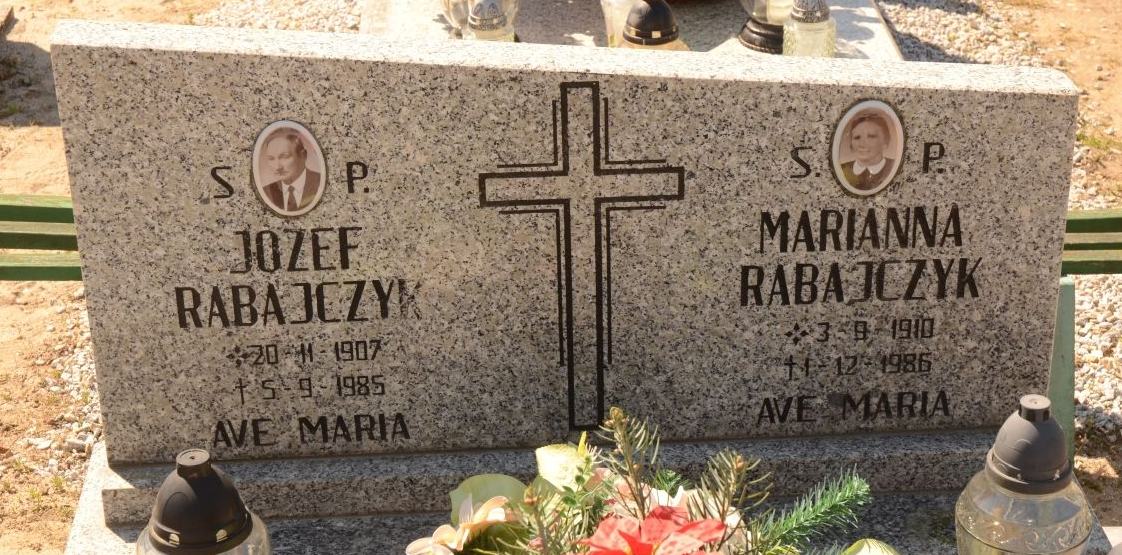
My own Rabajczyk line comes from the Kielce region. Following it back took me nine generations. Each link between parents and children was checked in the scan of the original record, not only in an index. Where a gravestone survives, I compared it with the parish entry.
More guides
- How to find your Polish ancestors: a simple step-by-step guide
- How to find the Polish village your ancestors came from
- Polish church records
- Same name, different person
- Polish ancestors from Galicia
- How to read a Polish parish record from 1868–1917 (central Poland)
- Silesian ancestors in Texas
- Your grandfather served with the Polish Forces: finding his family before 1939
- Free word list for old Polish parish records (PDF)
- Free tool: Polish Record Decoder (dates, words, partitions)
- Research example: one woman, several surnames
- How to hire a Polish genealogist: what to check first
- Polish genealogy research: prices and what’s included
- All guides
When it’s worth asking for help
Many people manage the first steps on their own. It gets hard when:
- your family papers say only “Russia” or “Radom”,
- the records are in Russian handwriting,
- the village name appears in several parishes,
- the books for your parish were damaged or are not online.
If one of these sounds familiar, start with a free check. Tell me what you know about one family line or one parish. Usually within 3 working days I’ll reply whether and where the parish books for that place are recorded as surviving, according to archive catalogues and online inventories, and which package fits your search. This is a free initial check of catalogues and availability, not the search itself. You pay only if you decide to go ahead with a package.
Ask for a free checkSee packages and prices