How to find your Polish ancestors: a simple step-by-step guide
Millions of families in the USA, Canada and Germany have roots in Poland. Many know their grandparents’ names but not much more. These steps show how to go from a family story to the original records.
Where to start looking for Polish ancestors
Most searches start with very little: a grandparent’s name, a rough year of emigration, perhaps a town nobody in the family can spell. That is enough to begin. The order of the steps below matters, because each one gives you what the next one needs: first what the family knows, then the documents from the new country that name the village, then the parish, and only then the parish books themselves. Searching Polish records before you know the parish is an easy way to lose weeks.
Step 1: Write down what your family already knows
Start with yourself and go back: parents, grandparents, great-grandparents. For each person, note the full name, the approximate year of birth, marriage or death, and any place you have heard of. Ask older relatives now. One remembered village name can save weeks of searching.
Step 2: Find the village name in documents from the new country
Most emigrants never wrote their village on a family tree, but officials did. Good places to look:
- ship passenger lists, which often give the last place of residence;
- naturalization papers and census records;
- church records from the parish where the family settled;
- military draft cards, death certificates and obituaries.
Village names were often spelled the way a clerk heard them, or in German or Russian. A name may also exist in several regions of Poland. That is why we always compare the place with the parish it belonged to at that time.
Step 3: Find the parish
Records were kept by parishes, not by villages. A small village usually belonged to a parish in a nearby larger village or town. Once you know the parish and roughly when your family lived there, you know which books to search.
Step 4: Search the indexes, then read the full records
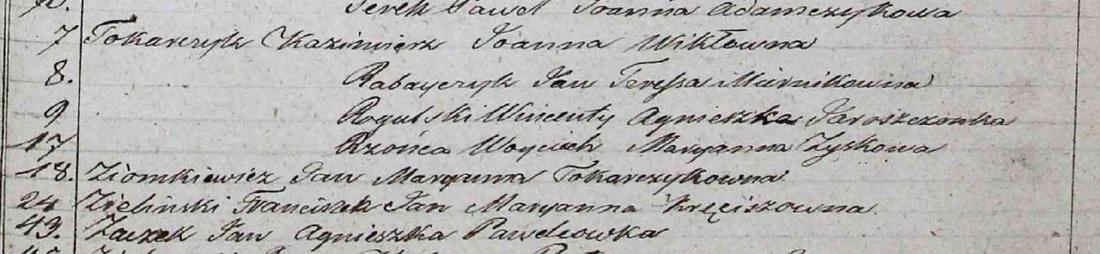
Online indexes help you find an entry quickly. But an index line is short and sometimes wrong. The full record says much more: ages, places of birth, parents, witnesses. Always look at the scan of the original page.
Step 5: Check every link between generations
This is where most online family trees go wrong. In one parish, many families share the same surname, and two men called Jan born in the same year can easily be mixed up. A reliable tree confirms each link in more than one record: the ages, places and parents in the birth, marriage and death records should agree. If they don’t, the link stays a guess, not a fact.
Step 6: Keep your sources
For each fact, write down the parish, the year, the record number and where you saw it. Your children, cousins or another researcher can then check your work and build on it, instead of starting again.
If you would rather hand the search to someone else, prices and what’s included shows what each package covers, including the sources you receive.
More guides
- How to find the Polish village your ancestors came from
- Polish church records
- Same name, different person
- Polish ancestors from Galicia
- How to read a Polish parish record from 1868–1917 (central Poland)
- Silesian ancestors in Texas
- Free word list for old Polish parish records (PDF)
- Finding your ancestors from the Kielce region
- Your grandfather served with the Polish Forces
- Research example: one woman, several surnames
- How to hire a Polish genealogist: what to check first
- Polish genealogy research: prices and what’s included
- All guides
When it’s worth asking for help
Many people manage the first steps on their own. It gets hard when:
- you don’t know the name of the village the family came from,
- the record is handwritten in Russian or Latin,
- the books for your parish are not online,
- two families in the parish had the same names.
If one of these sounds familiar, start with a free check. Tell me what you know about one family line or one parish. Usually within 3 working days I’ll reply whether and where the parish books for that place are recorded as surviving, according to archive catalogues and online inventories, and which package fits your search. This is a free initial check of catalogues and availability, not the search itself. You pay only if you decide to go ahead with a package.
Ask for a free checkSee packages and prices